
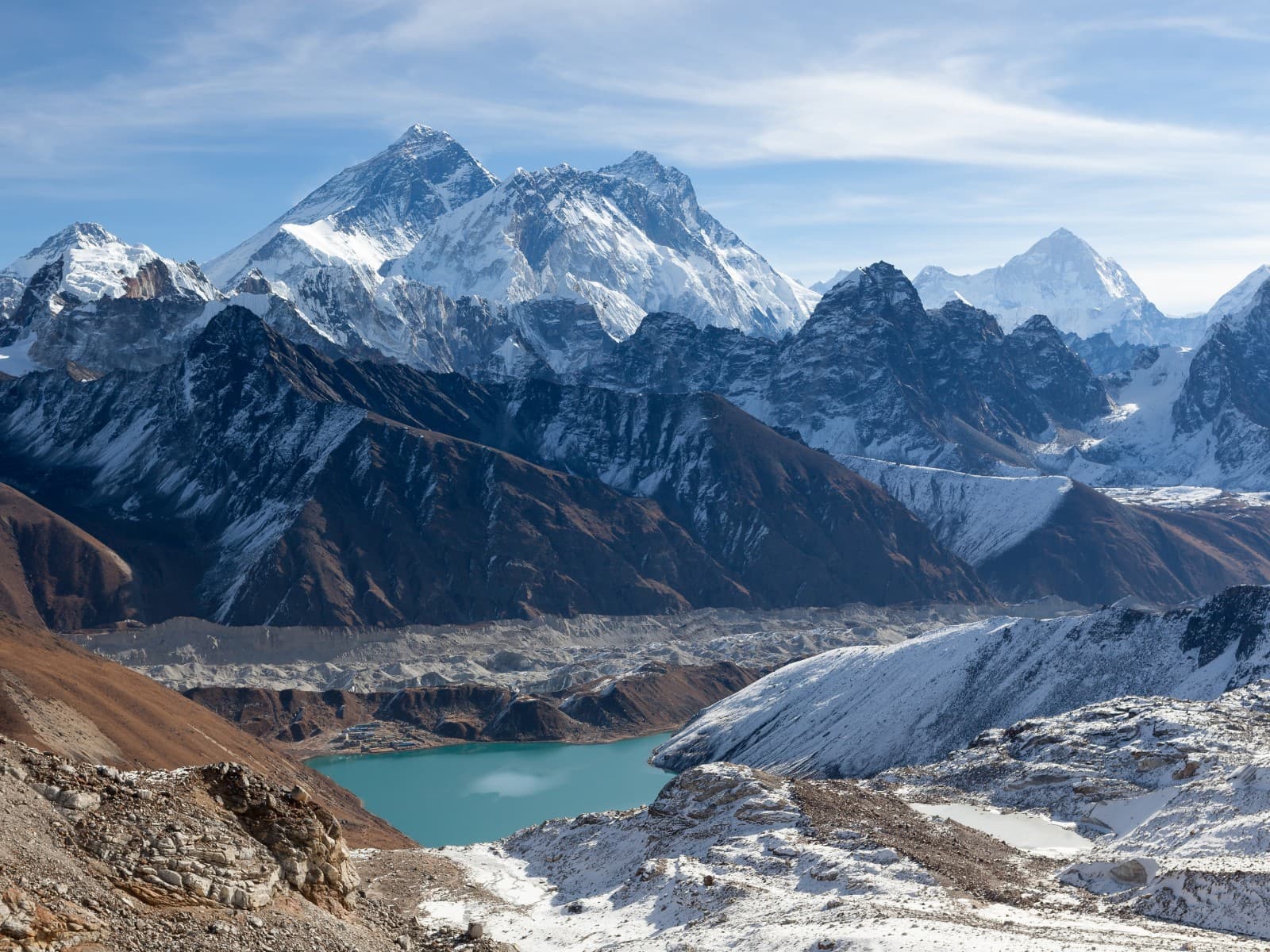
Gokyo Lake Trekking 13 days
Destination
Everest Solukhumbu Region
Adventure Type
Trekking Adventures
Difficulty Level
medium
Duration
13 Days
Trip Region
Everest Region
Highest Altitude
4790m
Group Size
1-20+
Season
Autumn & Spring
Gokyo Lake Trekking 13 days
Journey to the Heart of the Gokyo Lakes.
Overview
The Gokyo Lakes Trek is a 13-day Himalayan adventure, a combination of clean alpine scenery and pure Sherpa culture. The trip begins with a drive out of Kathmandu to Ramechhap and a short flight to Lukla, the entry point of the Everest region. Trekking along the path, the visitors can enjoy a combination of fertile valleys, glacial lakes, and an enriching cultural experience.
It's a five to six-hour daily walk, with a moderate amount of difficulty and pleasure in diverse landscapes. Phakding at 2,610 m is the lowest point of the trek, and the highest point is Gokyo Ri at 5,357 m where you will be able to see Everest, Lhotse, Makalu, Cho Oyu, and the Ngozumpa Glacier in a panoramic view. At Namche Bazaar, acclimatization involves a trek to the Everest View Hotel, where the gradual adjustment to the altitude takes place.
The path ascends continuously around Dole and Machhermo, with the trekkers viewing yak pastures, rugged ridges, and panoramic mountain scenes. The village of Gokyo is located on the side of the 3rd lake, and its blue waters mirror the surrounding mountains. Gokyo Ri is the summit of the trek, and a sunrise illuminating the Himalayas unleashes unforgettable hues.
You will be lodging in hotels in Kathmandu and teahouses on the way. You will be served a complete meal, tea, and fruit daily. The trek involves the use of licensed guides, porters, and medical support to offer safety.
The hike is most advisable during spring or fall, when the combination of nature, the exploration of culture, and reasonable walking time is all possible. A combination of high altitude adventure and calm scenery makes it a very fulfilling.

Trip Highlights
- Scenic flight to Lukla (2,860 m) after a drive from Kathmandu to Ramechhap, followed by a gentle trek to Phakding (2,610 m). Distance: ~8 km, descent of 250 m through pine forests, suspension bridges, and riverside trails.
- Trek from Phakding to Namche Bazaar (3,440 m), crossing suspension bridges over the Dudh Koshi River. Distance: ~10–11 km, ascent of 830 m, with vibrant Sherpa villages and the first views of Everest.
- Acclimatization day in Namche Bazaar, with a short hike to Everest View Hotel (3,880 m). Gain: ~440 m, offering panoramic scenery of Everest, Lhotse, and Ama Dablam while adjusting safely to altitude.
- Trek from Namche Bazaar to Dole (4,200 m). Distance: ~11 km, ascent of 760 m. The trail passes rhododendron forests and offers wide Himalayan vistas.
- Trek from Dole to Machhermo (4,470 m). Distance: ~7 km, ascent of 270 m. The route climbs gradually through alpine meadows with views of Cho Oyu.
- Trek from Machhermo to Gokyo (4,790 m). Distance: ~7 km, ascent of 320 m. The trail leads past the turquoise Gokyo Lakes to the village of Gokyo.
- Acclimatization day in Gokyo, with a hike to Gokyo Ri (5,357 m). Gain: ~567 m, offering breathtaking views of Everest, Cho Oyu, Makalu, and the Gokyo Lakes.
- Trek from Gokyo back to Dole (4,200 m). Distance: ~13 km, descent of 590 m. The trail retraces through alpine valleys and yak pastures.
- Trek from Dole to Namche Bazaar (3,440 m). Distance: ~11 km, descent of 760 m. The route passes Sherpa villages and rhododendron forests.
- Trek from Namche Bazaar to Lukla (2,860 m). Distance: ~18 km, descent of 580 m. The long day passes through suspension bridges, pine forests, and lively Sherpa villages, completing the circuit.
- Flight from Lukla to Ramechhap and drive to Kathmandu (1,400 m). Altitude loss: 1,460 m, returning to city comforts after the mountain adventure.
- Departure day from Kathmandu, or extension for another Himalayan activity such as cultural tours or short hikes.
Itinerary
Package Cost Details
Included In Package
- Private airport transfers in a comfortable vehicle for smooth arrivals and departures
- Accommodation in teahouses during the trek and hotels in Kathmandu (twin‑sharing basis)
- Full board meals during the trek (breakfast, lunch, and dinner), with seasonal fruits after dinner
- Experienced English‑speaking trekking guide providing professional and friendly support
- Porter service is optional (one porter shared between two trekkers)
- Salaries, equipment, and insurance coverage for guides and porters
- Emergency rescue coordination services (rescue costs to be covered by trekker’s travel insurance)
- A basic first‑aid kit carried by the guide for safety
- Trek completion certificate to commemorate your achievement
- Required permits: Sagarmatha National Park Permit and Khumbu Pasang Lhamu Rural Municipality Entry Permit
- Printed trekking route map to help navigate the trek
- All applicable government taxes and official charges
Excluded In Package
- Travel insurance (recommended to cover high‑altitude trekking and emergency rescues)
- Personal expenses during the trek, including hot showers, device charging, and Wi‑Fi
- Beverages of any kind: tea, coffee, mineral water, soft drinks, alcoholic drinks, etc.
- Personal trekking gear and equipment (boots, jackets, poles, sleeping bags, etc.)
- Tips for guides and porters
- Expenses due to unforeseen circumstances such as natural disasters, extreme weather, political unrest, or flight delays (especially Lukla flights)
- Kathmandu hotel and food expenses before/after trek (outside the package)
- Sightseeing or cultural tours in Kathmandu not included in the trekking package
Trip Info
How does the Gokyo Lake trek start and end?
This journey begins with the official arrival in Kathmandu, orientation, and the preparation of departure. It is a picturesque journey to Ramechhap and a short flight to Lukla, the base of the Everest region. The path is a mellow walk and begins at Lukla, then moves on to Phakding (2,610 2,610 m), where Tibetan culture is evident in mani walls, prayer wheel, and a variety of Sherpa villages along the way.
The path ascends to Phakding then to the busy Sherpa capital, Namche Bazaar (3,440 ⁸) and the ridge-topped valley, with Himalayan scenery. The process of acclimatization will include an ascent to the Everest View Hotel where you will get a glimpse of Everest, Lhotse, and Ama Dablam. Sherpa hospitality, vibrant Saturday markets, and trips to monasteries and museums, which display mountaineering history and heritage influenced by Tibet, are all part of cultural experiences.
Trekkers slowly climb to Dole (4,200 m) and Machhermo (4,470 m) through alpine fields, yak grazing fields and ridges overlooking Cho Oyu. The path changes to dry mountainous areas, providing an incomparable scenic diversity. The trail goes through villages filled with the traditional stone houses and spinning prayer flags and the stories of the local gods give the journey some spiritual insight.
When trekkers arrive at Gokyo village (4,790 m), they are greeted by snowy mountain reflection lakes in turquoise. The climax of the trek is Gokyo Ri ( 5,357 m ) which provides a panoramic view of both Everest and Makalu along with Lhotse, Cho Oyu and the Ngozumpa Glacier. Gokyo Lakes are holy to both the Buddhists and the Hindus, and the waters are associated with the divine blessings in the local legends.
On the way back, you go through Machhermo, Dole, and Namche and finish at Lukla (2,860 m). Hotels and teahouses in Kathmandu offer accommodation. Dining is full board, tea and fresh fruit daily. Certified guides, porters, and medical services ensure that you are safe during the trek.
The adventure is completed with a trip back to Ramechhap by flight, a road trip to Kathmandu and leaving Kathmandu Tribhuvan International Airport.
Distance coverage, altitude gain, and drop of the Gokyo Lakes Trekking
|
Day |
Route |
Distance |
Duration |
Altitude Gain/Loss |
Sleep Altitude |
|
1 |
Arrival in Kathmandu, transfer to the hotel |
– |
– |
– |
1,400 m |
|
2 |
Drive Kathmandu → Ramechhap, flight to Lukla (2,860 m), trek to Phakding |
~8 km |
3–4 hrs |
–250 m |
2,610 m |
|
3 |
Trek Phakding → Namche Bazaar |
~10–11 km |
6–7 hrs |
+830 m |
3,440 m |
|
4 |
Acclimatization in Namche, hike to Everest View Hotel (3,880 m) and return |
~3–4 km |
3–4 hrs |
+440 m / –440 m |
3,440 m |
|
5 |
Trek Namche Bazaar → Dole |
~11 km |
5–6 hrs |
+760 m |
4,200 m |
|
6 |
Trek Dole → Machhermo |
~7 km |
4–5 hrs |
+270 m |
4,470 m |
|
7 |
Trek Machhermo → Gokyo |
~7 km |
5–6 hrs |
+320 m |
4,790 m |
|
8 |
Acclimatization in Gokyo, hike to Gokyo Ri (5,357 m) and return |
~4–5 km |
4–5 hrs |
+567 m / –567 m |
4,790 m |
|
9 |
Trek Gokyo → Dole |
~13 km |
6–7 hrs |
–590 m |
4,200 m |
|
10 |
Trek Dole → Namche Bazaar |
~11 km |
5–6 hrs |
–760 m |
3,440 m |
|
11 |
Trek Namche Bazaar → Lukla |
~18 km |
7–8 hrs |
–580 m |
2,860 m |
|
12 |
Flight Lukla → Ramechhap, drive to Kathmandu |
– |
– |
–1,460 m |
1,400 m |
|
13 |
Departure day from Kathmandu or optional onward activities |
– |
– |
– |
– |
This itinerary features the moderate altitude gains, an acclimatization hike at the Everest View Hotel, and easy daily hiking distances. The highlights make the Everest Panorama Trek ideal for beginners or those with limited time.
What are the Permits and Expenses Needed for the Gokyo Lake Trek 13 Days?
Sagarmatha National Park Entry Permit
Every visitor should acquire Sagarmatha National Park permit to hike in the Everest region. It is a fee to conserve forests, wildlife, glaciers, and trail facilities in the UNESCO World Heritage Site.
-
Foreigners: NPR 3,000 per person (USD 23–25)
-
SAARC nationals: NPR 1,500 per person
-
Children under 10: Free
Khumbu Pasang Lhamu Rural Municipality Permit
This local permit came to be used instead of the older TIMS requirements in the Everest region. It promotes community growth, infrastructure and general trail conditions throughout Khumbu villages.
-
Foreigners: NPR 2,000 per person (USD 15–16)
-
SAARC nationals: Same rate as foreigners
-
Children under 10: Free
TIMS Card (Trekkers’ Information Management System)
Although the Khambu Pasang Lhamu permit has mostly substituted TIMS in this area, there are still agencies that issue TIMS cards to use for official registration and safety check-in.
-
Foreigners: NPR 2,000 per person (USD 15)
-
SAARC nationals: NPR 600 per person
Trip Cost of the Gokyo Lake Trek 13 Days package 2026/2027
|
Group Size |
Price Per Person (USD) |
|
10 persons | |
|
10 – 20 persons | |
|
21+ persons | |
|
Single Supplement |
Note: Prices are per person. To a group of 10 trekkers, the price is .... USD per head. In cases of more than 21 individuals, the discounted rate is...USD per individual. Extra USD ... charge on personal dwelling if you demand a solitary room.
Best Time to Trek Gokyo Lake
Spring (March to May) | Ideal for Trekking
Spring offers mild temperatures, blooming rhododendrons, and stable weather. Trails are clear, though higher ridges may still hold snow in early March.
|
Month |
Day Temp (°C) |
Night Temp (°C) |
Precipitation |
Weather |
Snowfall |
|
March |
5 to 10 |
5 to -8 |
60mm |
Cold mornings, warming days |
Light at higher altitudes |
|
April |
8 to 15 |
2 to -6 |
70mm |
Stable, rhododendrons blooming |
Rare |
|
May |
10 to 18 |
0 to -5 |
90mm |
Warm, clear skies |
Minimal |
Autumn (September to November) | Best Season
The ideal time to do the Gokyo Lakes trek is always in autumn. It is clear, stable weather, and crisp air prevails. Trails are not wet, making slips less likely, but November nights are freezing.
|
Month |
Day Temp (°C) |
Night Temp (°C) |
Precipitation |
Weather |
Snowfall |
|
September |
8 to 15 |
0 to -6 |
140mm |
Clear skies, occasional showers |
Light at higher altitudes |
|
October |
6 to 14 |
2 to -8 |
80mm |
Stable, crisp skies |
Rare |
|
November |
4 to 10 |
5 to -12 |
50mm |
Clear, colder nights |
Begins at higher passes |
Winter (December to February) | Harsh & Challenging
Winter brings extreme cold, heavy snowfall, and icy trails. Trekking is dangerous because of snowbound routes, the danger of frostbite, and altitude illness.
|
Month |
Day Temp (°C) |
Night Temp (°C) |
Precipitation |
Weather |
Snowfall |
|
December |
0 to 8 |
-5 to -15 |
40mm |
Cold, clear skies |
Heavy |
|
January |
-2 to 6 |
-8 to -18 |
30mm |
Freezing, icy trails |
Very Heavy |
|
February |
2 to 8 |
-6 to -16 |
35mm |
Cold, occasional, clear days |
Heavy |
Summer/Monsoon (June to August) | Wet & Slippery
The monsoon rains cause heavy rainfall, cloudiness and landslides in lower valleys. Trails are dirty and slurry, and the sight of the Everest and Gokyo Lakes is frequently blocked.
|
Month |
Day Temp (°C) |
Night Temp (°C) |
Precipitation |
Weather |
Snowfall |
|
June |
10 to 16 |
5 to -4 |
200mm |
Rainy, cloudy skies |
Rare |
|
July |
12 to 18 |
6 to -3 |
250mm |
Heavy rain, poor visibility |
Rare |
|
August |
12 to 17 |
6 to -2 |
220mm |
Wet trails, frequent clouds |
Rare |
Summary
The best seasons for the Gokyo Lakes Trek are Spring (March–May) and Autumn (September–November), offering clear skies, stable weather, and vibrant landscapes. Winter (December–February) is freezing with heavy snowfall, while Summer/Monsoon (June–August) brings heavy rain, landslides, and obscured mountain views.
Dangerous Areas on the Gokyo Trek
-
Ngozumpa Glacier: Slippery ice, hidden crevasses, avalanche risk in winter.
-
Machhermo to Gokyo ascent: Steep ridges prone to snow buildup and wind exposure.
-
Gokyo Ri summit (5,357 m): Risk of altitude sickness, frostbite, and avalanches in winter.
-
Monsoon valleys (Phakding–Namche): Landslides, flooding, and slippery trails during June–August.
Packing List for the Gokyo Lake 13-Day Trek
General Essentials
-
Four-season sleeping bag suitable for sub-zero nights
-
Insulated down jacket for high-altitude cold
-
Daypack 35–45L with waterproof cover
-
Trekking poles for steep ascents and glacier crossings
-
Water purification tablets or portable filter
-
Headlamp with spare batteries for teahouse evenings
Upper Body
-
Sun hat or cap for daytime exposure
-
Warm woolen beanie for chilly mornings and nights
-
UV-protected sunglasses for snow glare
-
Neck gaiter or buff for wind protection
Torso Layers
-
Moisture-wicking base layers
-
Two short-sleeve trekking shirts
-
Two long-sleeve trekking shirts
-
Fleece jacket or pullover for warmth
-
Waterproof and windproof shell jacket
Lower Body
-
Thermal leggings/base layer for cold nights
-
Two pairs of trekking trousers
-
Hiking shorts for lower altitudes
-
Comfortable pants for teahouse stays
-
Rain/snow shell pants for wet or snowy conditions
Hands
-
Lightweight liner gloves
-
Insulated waterproof gloves for higher elevations
Feet
-
Warm wool socks for cold nights
-
Trekking socks and liners for daily use
-
Waterproof trekking boots with ankle support
-
Gaiters for snow and muddy trails
-
Casual shoes/slippers for teahouses
Undergarments & Sleepwear
-
Quick-dry underwear
-
Sports bras (for women)
-
Thermal sleepwear for high-altitude nights
Medical & Personal Care
-
Personal first aid kit, altitude medication, pain relievers
-
Oral rehydration salts for hydration
-
Sunscreen SPF 50+ and lip balm with SPF
-
Menstrual products (for women)
-
Hand sanitizer, wet wipes, and toiletries
Electronics
-
Power bank (10,000–20,000 mAh)
-
Solar charger for remote areas
-
Camera/smartphone with extra memory cards
-
Universal adapter plug
Miscellaneous
-
Trekking duffel bag for porter use
-
Lightweight towel
-
Notebook and pen
-
Snacks: energy bars, nuts, chocolates
-
Reusable water bottle or hydration bladder
-
Small lock for duffel bag
-
Lightweight book or Kindle
Equipment Provided by the company
-
Down jacket (loaned for trek)
-
Four-season sleeping bag (loaned for trek)
-
Trekking duffel bag (70L, for porter use)
-
Gokyo Lakes trekking route map
-
Trekking T-shirt (souvenir)
-
Appreciation certificate after trek completion
-
First aid kit with oximeter for altitude monitoring
-
Basic medical support during the trek
Note: The company provides the essential gear but trekkers are encouraged to bring their own clothes, waterproof trekking shoes, toiletries, sun protection, water bottle that can be reused, snacks, electronic gadgets and personal medicines to be comfortable and safe.
Can You Trek the Gokyo Lake Solo?
Foreign hikers are no longer allowed to hike the Gokyo Lakes route on their own. In 2023, laws have mandated that every trekker must have licensed guides with registered agencies. This facilitates safety and appropriate control. Gokyo Lakes Trek is thus a 13-day package guided by groups, which provides cultural immersion, logistical services, and proper navigation. Passing over elevated areas like Gokyo Ri at 5,357m is risky due to altitude sickness and erratic weather. Acclimatization, emergency response, and a safe and pleasant adventure require professional advice.
What are the Meals and Accommodation Like in the Gokyo Lake Trek 13 Days Route?
Gokyo Lakes 13‑Day Trek Meals and accommodation create the perfect balance between comfort and Himalayan experiences.
In Kathmandu:
-
Trekkers typically stay in 3‑star hotels with twin or double‑occupancy rooms.
-
Breakfast is included before departure to the trek and upon return.
Along the Trek:
-
Accommodation is in standard Sherpa teahouses. Rooms are simple, with twin‑sharing beds and basic bedding.
-
At lower altitudes (Phakding, Namche), some lodges may offer attached bathrooms and slightly better facilities.
-
At higher villages (Dole, Machhermo, Gokyo), facilities are more basic, with shared bathrooms and limited amenities due to remoteness.
-
In Gokyo, teahouses are rustic but welcoming, located beside the turquoise lakes with spectacular views of Cho Oyu and Everest.
Atmosphere:
-
Teahouses provide warmth, coziness, and Sherpa hospitality.
-
Evenings are communal, with trekkers gathering around wood stoves to share meals, stories, and the mountain atmosphere.
Meals
-
Full board meals are provided throughout the trek: breakfast, lunch, and dinner daily.
-
Traditional Nepali dishes like dal bhat (rice, lentils, vegetables) are supplemented by Sherpa and Tibetan‑inspired meals such as noodles, soups, pasta, momos, thukpa, eggs, and Tibetan bread.
-
Tea and coffee are served three times daily, and fresh seasonal fruit is offered after dinner to keep trekkers energized.
-
At higher altitudes (Dole, Machhermo, Gokyo), meals are simpler but hearty, designed to provide warmth and calories for demanding trekking days.
Notes
Meals include both Nepali and Sherpa/Tibetan dishes, with occasional international options in Namche Bazaar.
Fresh fruit is served after dinner along the trail.
Tea and coffee are provided three times daily.
Accommodation is on a twin/double sharing basis, with attached bathrooms available in lower villages, and shared bathrooms at higher altitudes.
This setup means the trekkers will receive high-quality food and good accommodation as they explore the cultural depth of the Everest area and the calmness of the Gokyo Lakes.
Visa and Entry Requirements for Gokyo Lake Trek
Nepal Entry Visa
Every foreigner needs a Nepal entry visa to participate in the Gokyo Lakes trek. The visa is acquired either at Tribhuvan International Airport in Kathmandu or Nepali embassies in other countries. They must have a valid passport (minimum six months) and a photo the size of a passport.
-
15-day multiple-entry visa: USD 30
-
30-day multiple-entry visa: USD 50
90-day multiple-entry visa: USD 125
-
Payments are generally made in cash, preferably in US dollars.
Sagarmatha National Park Entry Permit
Supports conservation of forests, glaciers, wildlife, and trail infrastructure in the UNESCO-listed Everest region.
-
Foreigners: NPR 3,000 (USD 23–25)
-
SAARC nationals: NPR 1,500
-
Children under 10: Free
Khumbu Pasang Lhamu Rural Municipality Permit
Introduced to replace TIMS in the Everest region, this fee supports local community development and trail maintenance.
-
Foreigners: NPR 2,000 (USD 15–16)
-
SAARC nationals: Same rate
-
Children under 10: Free
Local Municipality Fees
Trekking permits within the Everest/Gokyo region will also be required in addition to the entry visa. These permits are gathered at checkpoints along the trail. The charges directly sponsor Sherpa villages, infrastructural support, and culture. This is covered by the Khambhu Pasang Lhamu permit.
Provided by Trekking Company
Everest Guide Treks Company takes care of all the required permits and makes them part of a package. This keeps them within the Nepal trekking regulations and gives a hassle-free experience to the trekkers in the Gokyo Lakes adventure.
Travel Insurance Requirements and Emergency Rescue Coverage for Gokyo Lake Trek
The Gokyo Lakes 13 -Day Trek requires travel insurance. All participants need to have a policy that includes trekking higher than 5,000 meters above sea level, as the path reaches Gokyo Ri at 5,357 meters. In the absence of this coverage, trekkers cannot participate in the trek based on the existing regulations.
The coverage should cover emergency helicopter evacuation, medical care in Kathmandu hospitals, and repatriation to your home country. It must also address flight cancellations, delays, and interruptions since flights in and out of Lukla are frequently caused by mountain weather that can be unpredictable.
This is usually organized at Namche Bazaar or Lukla to carry out a rescue mission. Helicopters are used in severe cases to evacuate people. The rescue operation is conducted by licensed guides at expenses which are covered by your insurance company.
Guides carry medical kits, such as oximeters, to measure the level of oxygen saturation at elevation. It assists in reporting the early signs of acute mountain sickness and timely medical decisions. An all-inclusive travel insurance policy is thus necessary to ensure safety, compliance, and peace of mind in the Gokyo Lakes 13-Day Trek.
Guide and Porter Services, Staffing, and Baggage Allowance for Gokyo Lake Trek
-
Trek led by licensed, English-speaking guides experienced in high-altitude management, glacier terrain, and Sherpa culture.
-
An assistant guide is provided for groups larger than 12 trekkers to maintain balanced supervision and safety.
-
Porters carry 12–15 kg per trekker, with one porter assigned for every two trekkers.
-
All staff are fully insured, properly equipped, and provided with food, lodging, and transport during the trek.
-
Salaries and expenses of guides and porters are included in the package cost.
-
Guides and porters ensure safety, manage logistics, and enrich the journey with cultural insights into Sherpa traditions, monasteries, and the sacred Gokyo Lakes, making the adventure secure and meaningful.
Altitude Sickness and Prevention for the Gokyo Lake Trek
Prevention starts with gradual acclimatization, adequate hydration, and rest days, which are scheduled in Namche Bazaar and Gokyo. Trekkers must not consume alcohol or smoke, must walk at a moderate pace, and have balanced meals every day. These are used to maintain energy and minimize the chances of altitude sickness.
The trek to Gokyo Lakes is an elevation that rises beyond 5,000 m, with the peak at Gokyo Ri (5,357 m). The risk of Acute Mountain Sickness (AMS) is more frequent at this altitude, where symptoms may include headache, nausea, and fatigue. The altitude and the thin air of Machhermo and Gokyo require one to be mindful of time and physical limits.
Accompanied by medical kits with oximeters to check the oxygen saturation and identify early signs of trouble. When the symptoms appear, the safest action is direct descent. Helicopters are dispatched, and rescue operations are organized via Namche or Lukla. Hospitals in Kathmandu receive patients to treat and recover. Guides control the process, provide timely medical assistance, and communicate with insurance companies.
Thus Gokyo Lakes 13 0 Day Trek can be a safe, rewarding, and memorable experience with proper acclimatization, professional guidance, and awareness of the dangers of altitude.
Personal Expenses and On-Trek Incidentals to Budget For on the Gokyo Lake Trek
The 13-day Gokyo Lakes trek package does not cover personal expenses that trekkers should anticipate. They usually include snacks, bottled water, and additional tea or coffee bought on the road. In teahouses, Wi-Fi, hot showers, and charging devices are extra, and the prices go up the higher the location. Personal expenses also include alcoholic drinks, soft drinks, and phone calls. Namche Bazaar or Gokyo village souvenir shopping will demand extra cash.
Guide and porter tips are usual and must be prepared in advance. It is recommended to bring small amounts of Nepalese rupee since the ATMs are scarce and unreliable in Khumbu region. A well-planned budget of these incidentals will make sure that the trek is a smooth sail without any financial strain and will give the trekkers the full pleasure of the Gokyo Lakes 13 Day adventure.
Extra Activities and Customized Services Available for Gokyo Lake
The standard 13-day trek package does not include extra activities or customized services, but can be adapted to individuals or groups to add cultural richness, comfort, and memorable highlights to the Gokyo Lakes journey.
Trekkers can improve their adventure Gokyo Lakes 13-Day trip by adding activities like private sightseeing in Kathmandu, cultural walks in Namche Bazaar or even visits to monasteries in Khumjung. Such experiences can give a more in-depth exploration of Sherpa culture and rest off the route.
Personalized services such as hotels upgraded in Kathmandu, individual vehicle transfers, or the hiring of additional porters to carry heavier baggage may be booked at request. These options will enable trekkers to experience greater comfort and convenience during the journey.
Everest, Lhotse, Cho Oyu, and the turquoise Gokyo Lakes can also be seen by helicopter at an additional fee. These flights are provided with panoramic views of the Himalayas and glaciers, providing trekkers with a special means to explore the region without lengthening the trek.
Everest Guide Treks Company helps in planning these trips, procuring permits, and communicating with the local communities. Their assistance helps to make the arrangements, adhere to the cultural and environmental policies, and unforgettable additions that enrich the Gokyo Lakes trekking experience.
Why Trek the Gokyo Lake with Us?
The Gokyo Lakes Trek with Everest Guide Treks is an adventure, cultural and professional trek in the central part of the Everest region. Our 13 day itinerary has been well-planned to balance the acclimatization with safety and the demonstration of the turquoise lakes, the Ngozumpa Glacier, and the panoramic view of Gokyo Ri. Licensed Sherpa guides guide through and provide profound information about local customs, monasteries and life in the highlands.
Our departures are guaranteed, flexible, and an all-inclusive package of Permits (Sagarmatha National Park, Khumbu Pasang Lhamu), transport, meals, accommodation, guides, and porters- we are taking away the logistical headache. We have a solid reputation and years of staff experience that will help to make the work of larger groups smooth, with assistant guides and porters to provide additional safety and care.
To make the trek more stimulating, additional services like cultural walks in Namche Bazaar, monastery tours in Khumjung or helicopter sightseeing trips of Everest, Lhotse and Cho Oyu can be organized. The Gokyo Lakes adventure with Everest Guide Treks is not only a high altitude adventure but safe, culturally immersive and memorable experience of the majectic lakes.